23 Low-Sugar Vegetables: Healthy Vegetables to Eat Every Day
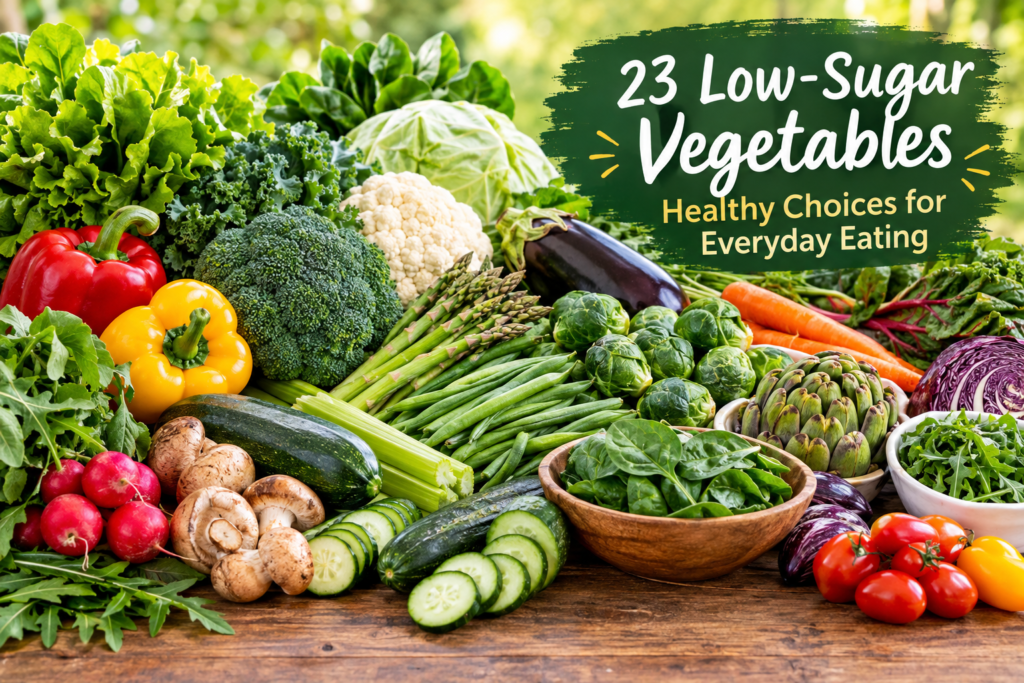
23 Low-Sugar Vegetables: Healthy Choices for Everyday Eating
When we think about eating less sugar, we often focus on desserts, candy, sweetened drinks, and processed foods. But choosing the right vegetables can also be a simple way to build nutritious, satisfying meals.
Although very few vegetables contain literally zero natural sugar, many vegetables are extremely low in sugar and carbohydrates. These foods can provide fiber, vitamins, minerals, antioxidants, and plenty of flavor without adding much sugar to your meals.
The American Diabetes Association recommends making non-starchy vegetables an important part of a healthy eating pattern. They can be especially useful when building balanced meals because they are generally lower in carbohydrates than starchy vegetables.
23 Low-Sugar Vegetables to Add to Your Meals
1. Spinach
Spinach is one of the easiest low-sugar vegetables to enjoy. Add fresh spinach to salads, omelets, smoothies, soups, or sautéed vegetable dishes.
It provides important nutrients while adding very little natural sugar.
2. Mushrooms
Mushrooms are naturally low in sugar and carbohydrates and have a satisfying savory flavor. They are excellent roasted, grilled, sautéed, or added to omelets and pasta dishes.
3. Celery
Celery is crisp, refreshing, and very low in sugar. Enjoy it raw as a snack, add it to salads, or use it as a flavorful base for soups and stews.
4. Cucumber
Cucumber is mostly water, making it a refreshing addition to a healthy diet. Add sliced cucumber to salads, sandwiches, wraps, or infused water.
5. Lettuce
Lettuce is a simple foundation for salads and wraps. Romaine, butter lettuce, and other salad greens can help add volume and freshness to meals without adding much sugar.
6. Kale
Kale is a nutrient-rich leafy green that works well in salads, soups, sautés, and smoothies. It is also an excellent option when you want to add more dark green vegetables to your diet.
7. Broccoli
Broccoli is a versatile vegetable that can be steamed, roasted, grilled, or added to stir-fries. It provides fiber and a variety of vitamins and minerals.
I cooked the broccoli for about 4 minutes in lightly salted water, keeping it tender while preserving its fresh flavor and vibrant color. To finish, I topped it with golden fried garlic, adding a delicious depth of flavor and a simple touch that makes this healthy vegetable even more enjoyable.
8. Cauliflower
Cauliflower is another excellent low-sugar vegetable. It can be roasted, steamed, mashed, or used as a substitute for some higher-carbohydrate foods.
Roasted cauliflower with herbs and olive oil makes an easy side dish.
9. Asparagus
Asparagus is naturally low in sugar and makes a delicious addition to lunch or dinner. Roast it with olive oil, garlic, and lemon, or serve it alongside grilled fish or chicken.
10. Zucchini
Zucchini is a mild and versatile summer squash. You can roast it, grill it, sauté it, or turn it into vegetable noodles.
It is particularly useful when you want to add more vegetables to pasta-style meals.
11. Cabbage
Green, red, and other varieties of cabbage are nutritious, affordable, and versatile. Use cabbage in salads, soups, stir-fries, or roasted vegetable dishes.
12. Brussels Sprouts
Brussels sprouts are a flavorful cruciferous vegetable that can be roasted until their edges become crisp.
Try them with olive oil, black pepper, garlic, and lemon.
13. Green Beans
Green beans are a simple side dish for almost any meal. Steam them lightly or roast them with garlic and herbs.
Choose fresh or frozen varieties without added sauces or sugar.
14. Bell Peppers
Bell peppers add beautiful color and a naturally sweet flavor to meals. Red, yellow, orange, and green peppers can be eaten raw or cooked.
They work wonderfully in salads, omelets, fajitas, soups, and roasted vegetable dishes.
15. Radishes
Radishes provide a fresh, slightly spicy flavor and a satisfying crunch. Slice them into salads or enjoy them as a simple snack.
16. Eggplant
Eggplant is a wonderful low-sugar vegetable for roasting, grilling, and baking.
It is also perfect for Mediterranean-inspired dishes such as caponata.
17. Okra
Okra is a nutritious vegetable that can be roasted, grilled, sautéed, or added to soups and stews.
Roasted okra is an especially simple way to enjoy it.
18. Swiss Chard
Swiss chard is a leafy green related to spinach and can be sautéed with garlic and olive oil.
It can also be added to soups, omelets, and vegetable dishes.
19. Arugula
Arugula has a distinctive peppery flavor and makes an excellent salad green. Combine it with cucumber, tomatoes, grilled chicken, or a simple olive-oil-and-lemon dressing.
20. Bok Choy
Bok choy is a crunchy leafy vegetable commonly used in Asian-inspired cooking.
Try quickly sautéing it with garlic, ginger, and a small amount of olive oil.
21. Collard Greens
Collard greens are hearty leafy vegetables that can be cooked with garlic, onions, or herbs.
They are an excellent way to add more dark green vegetables to your meals.
22. Artichokes
Artichokes contain fiber and can be steamed, roasted, or added to salads and other dishes.
They make a flavorful addition to a vegetable-centered meal.
23. Watercress
Watercress is a peppery leafy green that can be used in salads, sandwiches, soups, or as a garnish.
Like other leafy greens, it can help add variety to your vegetable choices.
Why Choose Low-Sugar Vegetables?
Low-sugar vegetables can make healthy eating easier because they provide plenty of nutrition without contributing large amounts of sugar.
Many non-starchy vegetables are also relatively low in calories and carbohydrates while providing fiber, vitamins, and minerals. The ADA notes that non-starchy vegetables can make up about half of a balanced plate.
Fiber is particularly valuable because it helps you feel satisfied and can slow the digestion of carbohydrate-containing foods.
Fresh, Frozen, or Canned?
You don’t have to buy only fresh vegetables.
Fresh, frozen, and canned vegetables can all fit into a healthy eating pattern. When buying canned or frozen vegetables, check the label and choose options without added sugar and, when possible, with less sodium.
Frozen broccoli, spinach, cauliflower, green beans, and other vegetables can be especially convenient for busy days.
Easy Ways to Eat More Low-Sugar Vegetables
You don’t need complicated recipes to enjoy these vegetables.
Try:
- Breakfast: spinach and mushroom omelet
- Lunch: cucumber, lettuce, and grilled chicken salad
- Snack: celery or radishes with a healthy dip
- Dinner: roasted broccoli, cauliflower, and asparagus
- Side dish: garlic green beans
- Quick meal: zucchini sautéed with garlic and olive oil
- Vegetable bowl: kale, roasted eggplant, mushrooms, and protein
- Soup: cabbage, celery, spinach, and other vegetables
And if you enjoy roasting vegetables, you can make a simple sheet-pan meal with broccoli, cauliflower, zucchini, asparagus, mushrooms, and bell peppers.
A Simple Healthy Eating Rule
Instead of worrying about eliminating every gram of natural sugar from your diet, focus on choosing whole, minimally processed foods and building balanced meals.
A useful approach is to fill approximately half your plate with non-starchy vegetables, then add a source of protein and an appropriate portion of quality carbohydrates. This is consistent with the American Diabetes Association’s plate approach.
Remember that vegetables are not the enemy simply because they contain small amounts of natural sugar. Even vegetables such as carrots and tomatoes can be part of a healthy eating pattern. The overall quality and balance of your diet matter.
The goal isn’t to make food restrictive. It’s to discover delicious foods that make healthy eating enjoyable.
A colorful plate filled with vegetables can be one of the simplest steps toward a healthier lifestyle—one meal at a time.