Habits That Help You Sleep Better

Simple Dinner Habits That Help You Sleep Better Naturally
Evening rituals to nourish your body, calm your mind, and transform your nights
There is something sacred about dinner time. It is the quiet pause between the demands of the day and the promise of rest.
In my own life, I’ve come to see dinner not simply as nourishment, but as preparation. Preparation for calm. Preparation for stillness. Preparation for sleep.
For many years, like so many people, I believed sleep was something that happened only when the lights went off. But the truth is, sleep begins hours earlier—in the kitchen, at the table, in the small and mindful choices we make about how we nourish ourselves.
The foods we eat, the time we eat, and the way we experience dinner all send signals to our nervous system. These signals either invite rest or quietly resist it.
Through simple, intentional dinner habits, you can create evenings that support deeper, more restorative sleep—naturally and gently.
Here are the habits that have made the greatest difference.
. Eat Earlier to Give Your Body Time to Rest
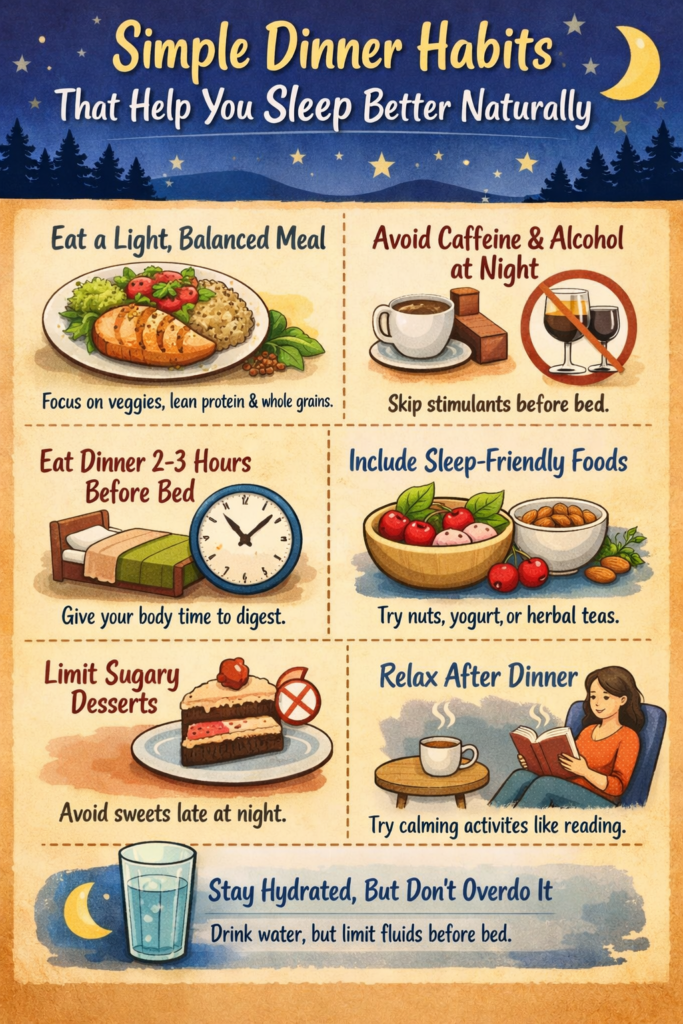
Your body needs time to transition between digestion and sleep. When dinner happens too late—especially within an hour of bedtime—your digestive system remains active when your body is trying to slow down. Instead of resting, your body is still working.
Eating dinner two to three hours before bed allows digestion to settle. Your heart rate lowers. Your body temperature begins to drop. Your nervous system prepares for rest.
This doesn’t mean rushing dinner. In fact, it’s the opposite. It means giving dinner its own space in your evening—a moment of presence instead of something squeezed in between tasks.
When dinner happens earlier, sleep often arrives more naturally.
. Choose Foods That Calm, Not Stimulate
Certain foods actively support relaxation, while others keep your nervous system alert. The difference is profound.
Sleep-supportive dinners often include:
- Roasted vegetables like eggplant, zucchini, carrots, or sweet potatoes
- Whole grains such as quinoa, brown rice, or farro
- Legumes like lentils or chickpeas
- Healthy fats like olive oil or avocado
- Light proteins such as fish, tofu, or beans
These foods contain magnesium, complex carbohydrates, and essential nutrients that help the body produce serotonin—a neurotransmitter that promotes calm and emotional balance.
Heavy processed foods, excessive sugar, or fried meals, on the other hand, can overstimulate the body and disrupt sleep.
Simple, whole foods allow the nervous system to exhale.
. Avoid Overeating in the Evening
There is a difference between feeling nourished and feeling full to the point of heaviness. Large meals require more energy to digest, which can interfere with your body’s ability to relax.
Overeating may cause:
- Restlessness
- Elevated heart rate
- Digestive discomfort
- Interrupted sleep
A helpful practice is to eat until you feel satisfied—not stuffed. This allows your body to complete digestion efficiently and move into rest mode.
Dinner should leave you comfortable, light, and at ease.
. Reduce Stimulants at Night
Many people know to avoid coffee in the evening, but stimulants appear in unexpected places—chocolate, soda, black tea, and even some desserts.
Stimulants block the natural chemicals that help you feel sleepy. Even small amounts can delay sleep or make it harder to fall into deeper sleep stages.
Spicy foods may also increase body temperature, making relaxation more difficult.
Instead, favor calming additions to your evening, such as:
- Herbal teas like chamomile or mint
- Warm vegetables
- Light grains
- Simple, balanced meals
These foods signal safety and relaxation to your nervous system.
. Support Sleep Hormones with Balanced Nutrition
Your body produces melatonin—the hormone responsible for sleep—using nutrients from the foods you eat. Certain ingredients help support this natural process.
Foods rich in tryptophan, magnesium, and complex carbohydrates include:
- Lentils
- Oats
- Pumpkin seeds
- Chickpeas
- Spinach
- Brown rice
When these foods are part of your dinner, they help your brain prepare for sleep naturally.
A simple bowl of roasted vegetables and quinoa, for example, does more than nourish. It prepares your body for rest on a chemical level.
. Favor Warm, Cooked Meals
Warm foods are easier to digest and more comforting to the nervous system. Soups, roasted vegetables, and cooked grains require less effort from the digestive system compared to cold or raw foods.
Warm meals also create a psychological sense of calm. They slow you down. They encourage presence.
There is a reason why warm dinners feel grounding. Your body recognizes warmth as safety.
This sense of safety makes sleep easier.
. Create a Consistent Dinner Routine
Your body thrives on rhythm. When dinner happens at different times each night, your internal clock struggles to find balance.
But when dinner becomes consistent—whether at 6:30 p.m. or 7:30 p.m.—your body learns what to expect. Your digestion adapts. Your nervous system prepares for rest at the appropriate time.
Consistency builds trust within your body.
And trust allows sleep to arrive naturally.
. Slow Down While Eating
In today’s fast-paced world, dinner often happens quickly—between notifications, television, and unfinished tasks. But eating quickly keeps the nervous system in an alert state.
When you slow down, everything changes.
Try:
- Sitting down fully
- Taking smaller bites
- Chewing slowly
- Pausing between bites
This activates the parasympathetic nervous system—the state responsible for rest and digestion.
Your body begins to relax immediately.
Dinner becomes not just nourishment, but restoration.
. Limit Alcohol in the Evening
Although alcohol may initially make you feel sleepy, it disrupts the deeper stages of sleep later in the night. This can lead to waking up frequently or feeling tired in the morning.
Alcohol interferes with REM sleep—the stage responsible for emotional and mental recovery.
Choosing calming alternatives, like herbal tea or warm water with lemon, supports uninterrupted, restorative sleep.
Your body rests more deeply without interference.
. Support Blood Sugar Balance
Balanced dinners help prevent blood sugar spikes and crashes during the night. When blood sugar drops suddenly, your body releases stress hormones that can wake you up.
To maintain stable energy levels, include:
- Fiber from vegetables
- Protein from legumes or fish
- Healthy fats from olive oil or avocado
- Complex carbohydrates from grains
This balance helps your body remain calm and stable throughout the night.
Sleep becomes deeper and more continuous.
. Create a Gentle Transition After Dinner
What happens after dinner matters just as much as the meal itself.
Instead of immediately returning to screens or work, allow your evening to soften.
You might:
- Take a short walk
- Wash dishes slowly
- Drink herbal tea
- Read something calming
These rituals signal to your nervous system that the day is ending.
Sleep begins in these small, quiet moments.
. Turn Dinner into a Ritual of Care
Dinner is not simply about nutrition. It is about care. It is a moment where you nourish yourself physically and emotionally.
When dinner becomes intentional—balanced, calm, and unrushed—it transforms your entire evening.
You begin to feel grounded.
Your breathing slows.
Your thoughts quiet.
Sleep becomes something you welcome, not something you chase.
A Simple Sleep-Supporting Dinner Example
One of my favorite sleep-supporting dinners is beautifully simple:
Roasted eggplant, zucchini, and carrots with olive oil.
A warm bowl of quinoa.
Seasoned lentils with herbs.
And chamomile tea to close the evening.
This meal is calming, nourishing, and deeply satisfying—without overwhelming the body.
It prepares you gently for rest.
The Quiet Power of Evening Habits
Sleep is not a switch you flip. It is a process your body enters when it feels safe, nourished, and calm.
Dinner is one of the most powerful ways to create that safety.
When you eat earlier, choose calming foods, slow down, and honor your body’s rhythm, sleep begins to change.
It becomes easier. Deeper. More restorative.
These habits are simple, but their impact is profound.
Over time, dinner becomes more than a meal.
It becomes the beginning of rest.